
Toolkit
Venue Toolkit
A practical guide for venues and event teams who want to build more focused, connected and presence-first rooms.
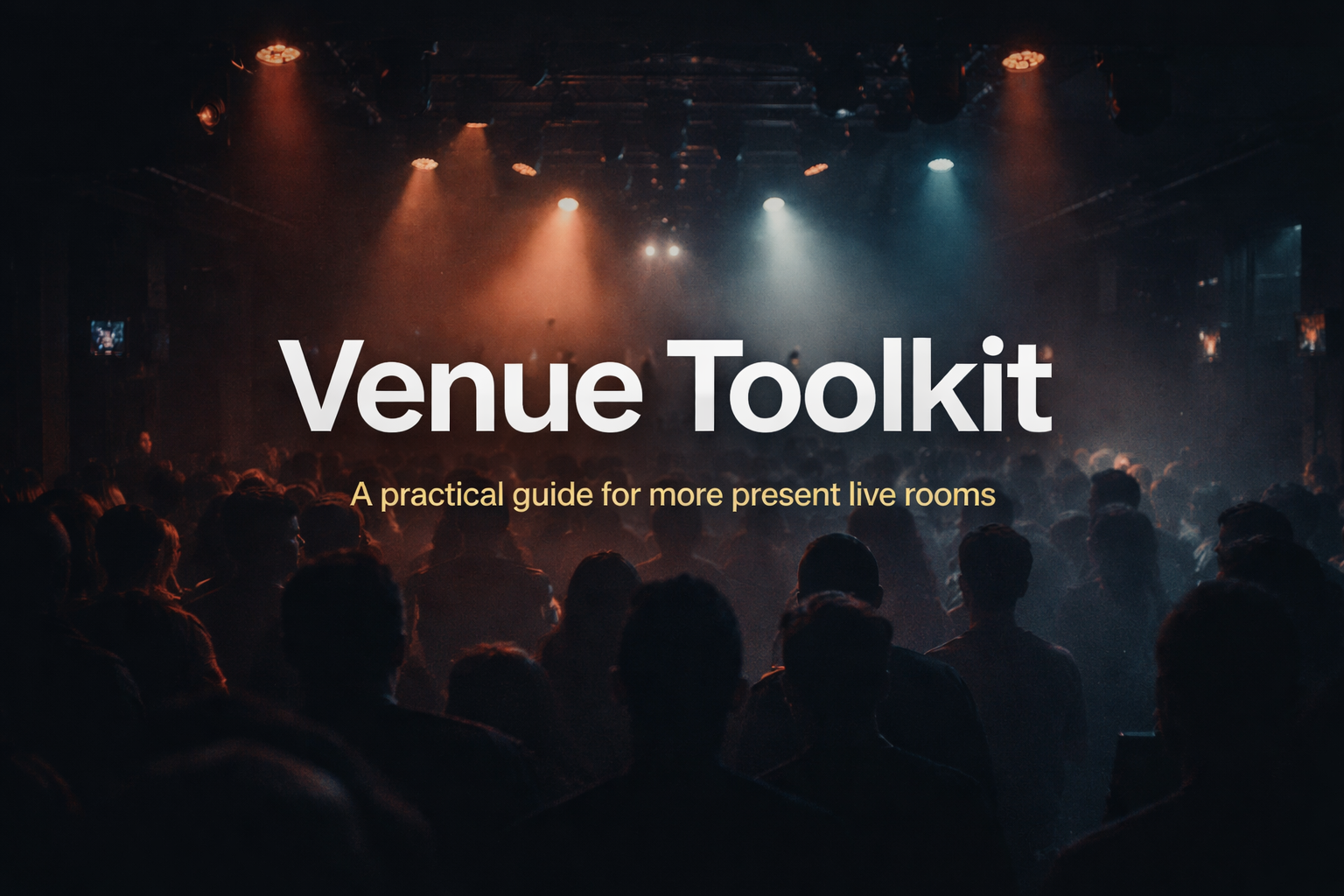
It does not aim to impose rigid rules. Its purpose is to help teams define intention, communicate it clearly and support a stronger live experience before, during and after the event.
1. Define the intention.
Write one short sentence that explains what kind of atmosphere the event is trying to protect. Keep it simple enough to repeat across all touchpoints.
2. Align the communication.
Use the same core message across ticketing, event pages, social posts, entry signage and stage language. Mixed signals weaken the effect.
3. Prepare the staff.
Door staff, security and floor staff do not need a script, but they do need context. If they understand the purpose, they will communicate it with more clarity and confidence.
4. Support the artist.
Give performers the option to reinforce the message in their own voice. Artist language often carries more weight than venue authority.
5. Shape the room.
Lighting, sound, pacing, screens, host language and crowd flow all influence whether the audience understands the request as meaningful or superficial.
6. Review after the event.
What worked? Where did attention drift? Which messages felt natural and which felt forced? Build from observation, not assumption.
This toolkit works best when treated as a living framework that can be adapted to different venues, formats and audiences.
Looking for a printable version to share with your team? Download the Venue Toolkit PDF.